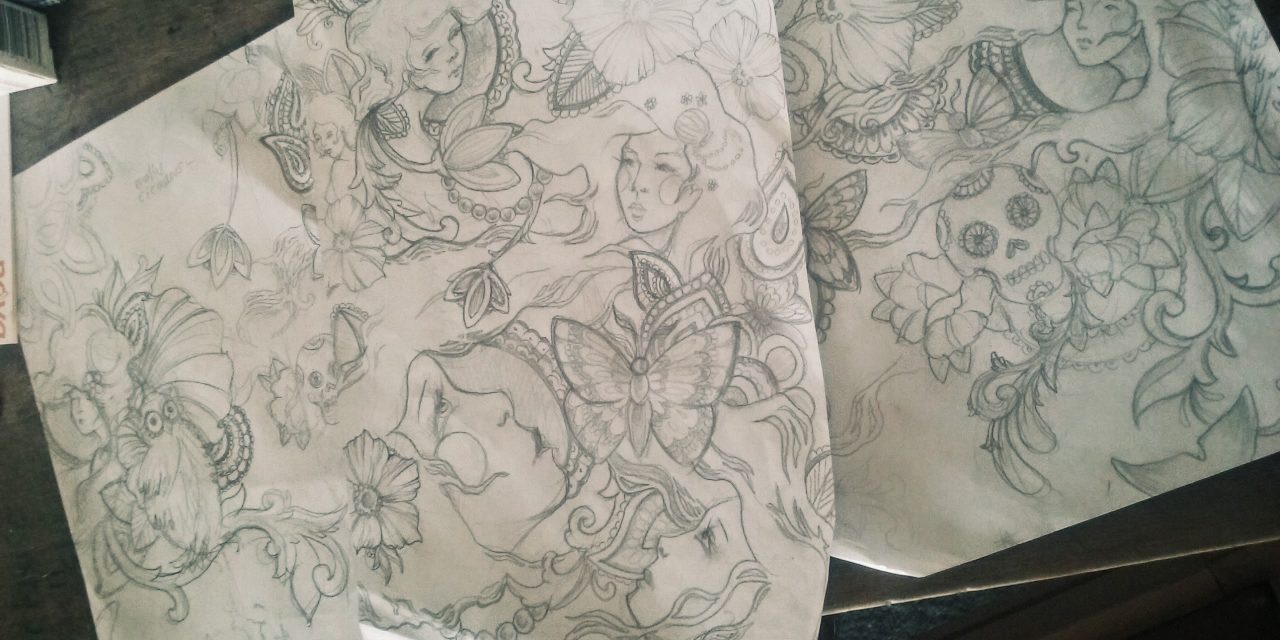
Jump right into your tattoo sleeve design by sketching your ideas, test-flowing layouts, and finding what truly fits your style and arm.
1. Start with a Sleeve Template
Use a tattoo sleeve arm template—print or trace it—so you’re designing right onto the shape of your arm. This keeps your art proportional, curved, and flow-ready from the start.
👉 Don’t have a template? Grab one for free in my “Designing Your Perfect Tattoo Sleeve” guide here.
2. Mind the Placement & Flow
Plan your main elements (like medusas, gypsy girls, skulls) and strategically place them:
- Shoulder: Ideal for big, bold designs
- Forearm / Inner arm: For vertical, readable pieces
- Elbow area: Use more background or softer filler
- Leave enough negative space so it doesn’t feel cluttered
👉 Check out How to Design a Tattoo Sleeve for visuals and flow tips.
3. Sketch Your Layout First
Before diving into details, sketch a rough layout of your sleeve design. You can draw directly onto a printable arm template (like this one) or use a digital mock-up.
At this stage, think big-picture composition — how your main elements flow down the arm, how they interact with joints, and how much breathing space each one has. You’re aiming to get the flow, spacing, and balance right before refining anything.
This step can save hours later and helps you avoid overcrowding or awkward placements when it comes time to tattoo.
4. Choose Your Style & Imagery
Decide what matches your style and story:
- Bold traditional or black & grey realism
- Whimsical floral or surreal characters
- Fine-line mandala, script, or tattoo flash icons
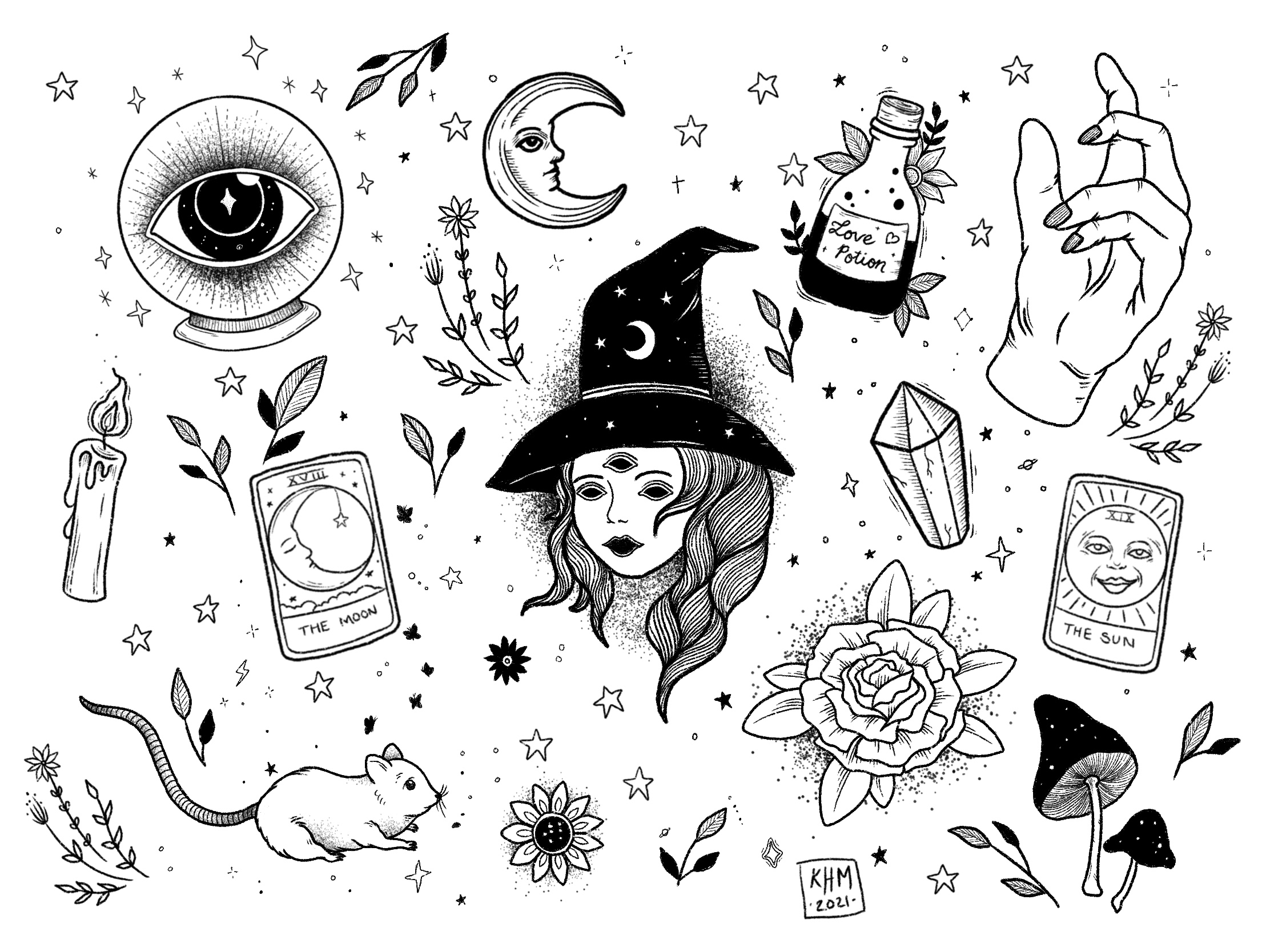
Use themes from my flash packs or choose your own. Want to see what’s popular? Try a Fire & Foliage or Mystical Garden flash sheet for flow-ready designs.
5. Add Connectors & Backgrounds
Bring cohesion to your sleeve with connectors—such as waves, vines, clouds, or dotwork. These fill gaps, guide flow, and tie main images together in a natural curve.
A mistake I’ve seen is using straight fillers—organic shapes work much better.
6. Check Contrast & Negative Space
A sleeve needs strong contrast to read well from a distance:
- Alternate between solid black, mid-shade, and clean skin
- Adjust contrast so no areas visually blend into each other
- Leave gentle gaps around elbows or shoulders for breathing space
7. Use Real Mockups
Drop your sketch onto a forearm or sleeve mockup (like the ones on my site) to see how it curves and scales. This confirms whether detail holds up and headings look natural on the body.
8. Try Flash Sheets for Faster Flow
A great alternative to custom sketching: start with one of my themed flash sheets. Each sheet is already crafted to flow together—just print, cut, and arrange on your template.
👉 Explore my flash shop here or download a free sample.
9. Useful Links
Once your layout feels good, link to key resources:
- Designing Your Perfect Tattoo Sleeve (with step-by-step advice)
- Custom tattoo commissions (if you want a sleeve drawn for you)
- Flash sheet downloads (to buy and build your concepts fast)
✅ Final Tips Before Tattooing:
- Revisit your mockups and sketches to confirm symmetry and flow
- Don’t over-detail filler areas—save that for main elements
- Discuss placement and size one last time with your tattoo artist
- Enjoy the process — planning is half the fun!